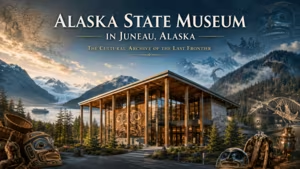
Located in the heart of Juneau, the Alaska State Museum serves as one of the most important cultural institutions in the state. It preserves, studies, and showcases Alaska’s natural history, Indigenous heritage, and political development, offering visitors a deeper understanding of the people and landscapes that define the region.
As part of the capital city’s cultural district, the museum provides a bridge between Alaska’s past and present connecting Indigenous traditions, colonial history, and modern statehood.
A Central Cultural Institution in Alaska’s Capital
The Alaska State Museum is part of the broader Alaska State Museums system, which also includes historical and cultural collections across the state. Its primary facility in Juneau functions as the central repository for thousands of artifacts, documents, and works of art.
The museum’s mission is to preserve Alaska’s diverse heritage while making it accessible to the public through exhibitions, education programs, and research initiatives.
Its location in Juneau places it close to other key institutions, including the Alaska State Capitol and downtown cultural areas, reinforcing its role within the city’s civic and educational landscape.
Exhibits That Tell Alaska’s Story
The museum’s exhibits span a wide range of topics, reflecting the complexity of Alaska’s history and environment. Key collection areas include:
Indigenous Cultures of Alaska
One of the most significant sections of the museum is dedicated to Alaska Native cultures, including Tlingit, Haida, Tsimshian, Yup’ik, Inupiat, and Athabascan communities.
Visitors can explore:
- Traditional tools and clothing
- Carved masks and ceremonial objects
- Basketry and beadwork
- Oral history recordings and storytelling traditions
These exhibits highlight the depth and diversity of Indigenous knowledge systems that have shaped Alaska for thousands of years.
Natural History of Alaska
Another major focus is Alaska’s unique environment. Exhibits explore:
- Glaciers and ice age geology
- Marine ecosystems and wildlife
- Forest and tundra biodiversity
- Fossils and prehistoric life
Interactive displays help visitors understand how landscapes like the Tongass National Forest were formed and how they continue to evolve.
Russian Colonial and Territorial History
The museum also documents Alaska’s period under Russian control and its transition to a U.S. territory. Artifacts include:
- Religious icons from Russian Orthodox missions
- Trade goods and fur industry items
- Early maps and exploration records
- Historical photographs and documents
This section provides context for Alaska’s geopolitical transformation before becoming a U.S. state in 1959.
Statehood and Modern Alaska
Exhibits also cover Alaska’s path to statehood and its development as a modern state. Topics include:
- Political milestones and constitutional development
- Resource management and economic growth
- Infrastructure and transportation history
- Contemporary cultural and social change
These displays connect historical events to present-day Alaska life.
Architecture and Visitor Experience
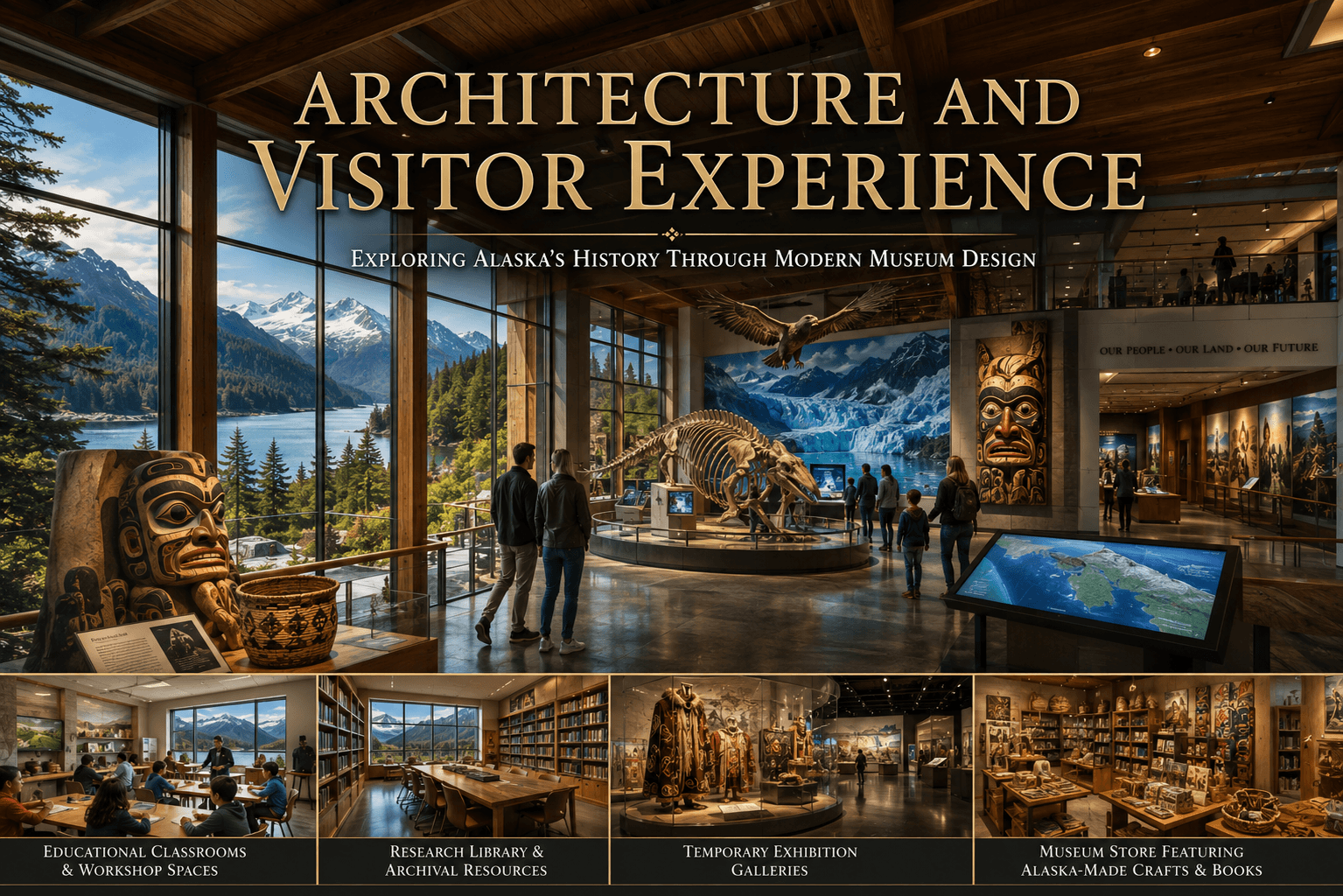
The Alaska State Museum is designed as a modern cultural facility that emphasizes accessibility and learning. Its interior features open galleries, climate-controlled exhibit spaces, and interactive installations.
Visitors move through exhibits in a structured flow, allowing them to transition from ancient history to contemporary culture in a cohesive narrative.
The museum also includes:
- Educational classrooms and workshop spaces
- A research library and archival resources
- Temporary exhibition galleries
- A museum store featuring Alaska-made crafts and books
This combination of functions makes it both a public attraction and a research institution.
Education and Community Engagement
Education is a central part of the museum’s mission. Programs are designed for school groups, researchers, and visitors of all ages.
Common offerings include:
- Guided tours and docent-led discussions
- Hands-on workshops for students
- Cultural demonstrations and artist talks
- Seasonal exhibitions focused on specific themes
These programs help connect visitors to Alaska’s cultural and environmental heritage in a more interactive way.
Connection to Juneau’s Cultural Landscape
The museum plays an important role in the cultural identity of Juneau. Its location near downtown makes it easily accessible to residents and visitors exploring the capital.
It is also part of a broader network of cultural sites that includes public art, historic buildings, and Indigenous heritage displays throughout the city.
Together, these institutions form a cultural corridor that reflects Alaska’s layered history.
Relationship to the Natural Environment
Like much of Juneau, the museum is closely connected to the surrounding environment. Exhibits frequently highlight the relationship between people and nature, particularly in regions shaped by glaciers, forests, and coastal ecosystems.
The nearby presence of the Tongass National Forest reinforces this connection, as many exhibits draw directly from species, landscapes, and ecological systems found in the surrounding region.
This integration of culture and environment is a defining feature of the museum’s identity.
A Living Record of Alaska’s Identity
The Alaska State Museum is not just a place to view artifacts it is a living record of the state’s identity. Its collections continue to grow through new acquisitions, research, and collaborations with Indigenous communities.
The museum plays a key role in ensuring that Alaska’s cultural heritage is preserved and shared in a respectful and educational manner.
By combining historical preservation with modern interpretation, it helps visitors understand the complexity of Alaska’s past and present.
Why the Alaska State Museum Matters
The Alaska State Museum stands as one of the most important cultural institutions in Juneau because it brings together art, history, science, and Indigenous knowledge under one roof.
It offers:
- A comprehensive view of Alaska’s cultural history
- Deep insight into Indigenous traditions and heritage
- Scientific understanding of Alaska’s natural environment
- Educational programs for all ages
- A central location within the capital city
For visitors and residents alike, the museum provides essential context for understanding Alaska beyond its landscapes revealing the human stories that have shaped the Last Frontier.
It is not just a museum of objects, but a museum of identity, memory, and place.