Located in the center of Juneau, the Alaska State Capitol stands as the seat of state government and the symbolic center of political life in Alaska. Unlike many U.S. capitols built as grand domed landmarks, Alaska’s capitol reflects a more modest, historic design that blends governance with the small-city character of Juneau.
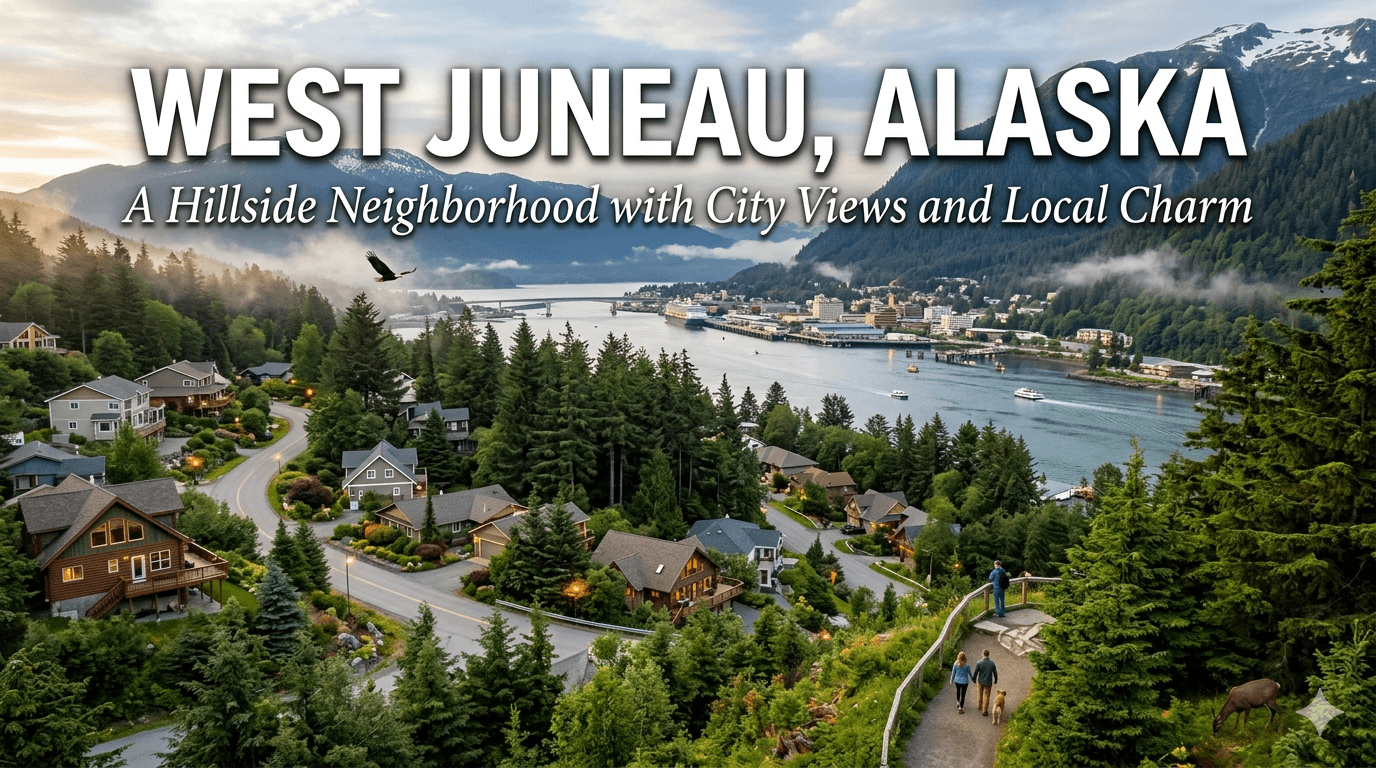
Surrounded by steep coastal mountains, forested hillsides, and the nearby waters of the Gastineau Channel, the building sits within one of the most geographically unique capital cities in the United States.
A Capital Without a Highway Connection
Juneau is one of the few U.S. state capitals not connected to the rest of its state by road. The Alaska State Capitol operates in a city accessible only by air or sea, giving it a remote yet vital role in governance.
This isolation has shaped how the building functions. Legislators, staff, and visitors travel via ferry or through Juneau International Airport to reach the capital during legislative sessions.
Despite its remote setting, the capitol remains fully integrated into Alaska’s political and administrative systems, coordinating statewide policy from the heart of Southeast Alaska.
Historic Architecture with a Practical Design
The Alaska State Capitol was originally constructed in 1931 when Alaska was still a U.S. territory. At the time, it served as the federal courthouse and territorial government center before becoming the official state capitol when Alaska achieved statehood in 1959.
Unlike many capitol buildings designed with large domes and expansive grounds, this structure is relatively simple and functional. Its exterior reflects early 20th-century civic architecture, emphasizing practicality over grandeur.
Inside, the building houses:
- The Alaska State Legislature chambers
- The Governor’s offices
- Legislative committee rooms
- Public meeting spaces
This straightforward design reflects Alaska’s practical governance culture and the city’s limited urban footprint.
The Center of Alaska’s Legislative Activity
Each year, the Alaska State Capitol becomes the focal point of statewide political activity during the legislative session, typically held in winter and spring.
During this period, the building and surrounding downtown area experience a surge in activity. Lawmakers from across the state gather in Juneau to debate budgets, infrastructure, resource management, and policy affecting Alaska’s diverse regions.
The capitol’s compact size creates a unique political environment where legislators, staff, lobbyists, and citizens often interact in close proximity, fostering direct engagement in the lawmaking process.
A Capitol Set Within a Natural Landscape
One of the most distinctive aspects of the Alaska State Capitol is its setting. Unlike capitols surrounded by dense urban development, this building sits within a small downtown area framed by mountains and water.
Just steps away, visitors can see forested hillsides rising steeply behind the city, while the nearby coastline connects to the broader ecosystem of the Tongass National Forest.
This proximity to nature is not symbolic it is physical. Wildlife, weather, and terrain are constant reminders of Alaska’s environment influencing daily governance.
Downtown Juneau Connection
The Alaska State Capitol is located within walking distance of Downtown Juneau, the city’s commercial and tourism hub. This proximity allows government operations to blend seamlessly with restaurants, shops, hotels, and the waterfront district.
During legislative sessions, downtown becomes a busy intersection of politics and tourism. Visitors often see lawmakers walking between buildings, attending meetings, or engaging with constituents in public spaces.
This integration between civic life and everyday activity is one of the defining features of Juneau’s capital identity.
Public Access and Civic Engagement
The Alaska State Capitol is open to the public, reflecting the state’s emphasis on accessibility and civic participation. Visitors can enter the building, observe legislative sessions, and learn about Alaska’s political system.
Guided tours are often available, offering insights into the building’s history, legislative process, and architectural evolution.
Public engagement is a key part of the capitol’s function, allowing residents and visitors alike to better understand how decisions are made at the state level.
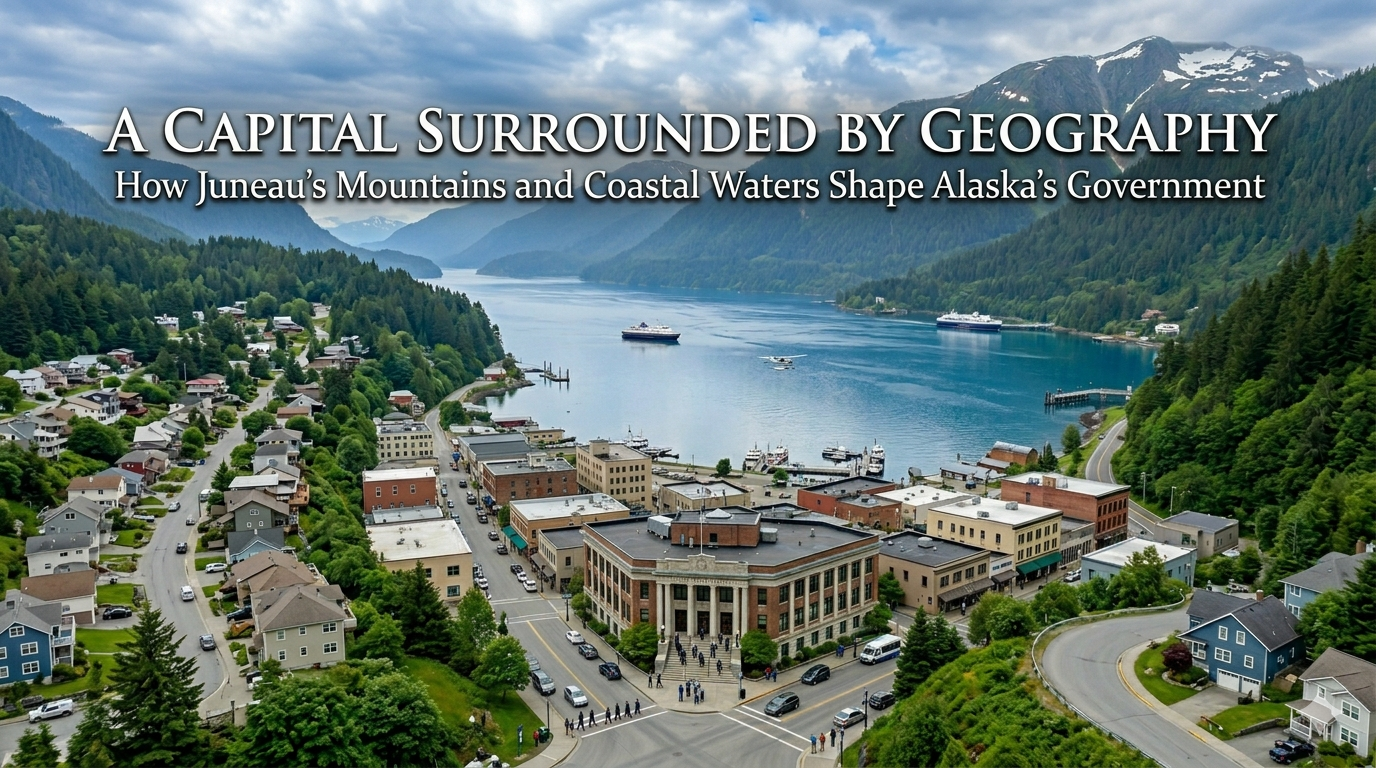
A Capital Surrounded by Geography
The building’s location is deeply influenced by Juneau’s geography. Surrounded by steep mountains and coastal waters, the city has limited space for expansion, which has shaped its urban development.
The capitol sits in a valley where infrastructure, government buildings, and residential areas are tightly arranged between natural features.
This geography reinforces the sense that governance in Alaska operates within, not separate from, its environment.
Seasonal Changes in the Capitol Environment
The Alaska State Capitol experiences strong seasonal shifts that affect both its surroundings and activity levels.
- Winter: Legislative sessions are in full swing while snow covers surrounding mountains and streets
- Spring: Increased political activity coincides with melting snow and longer daylight hours
- Summer: The building is quieter as tourism dominates Juneau’s economy
- Fall: Preparations begin for the upcoming legislative session as weather cools
These seasonal cycles shape the rhythm of political life in the capital.
Cultural and Historical Significance
Beyond its governmental role, the Alaska State Capitol is a symbol of the state’s journey from territory to full statehood. Its modest design reflects Alaska’s practical governance style and frontier history.
The building has witnessed decades of political development, including debates over natural resources, Indigenous rights, infrastructure, and environmental policy.
It stands as both a working government facility and a historical landmark representing Alaska’s political evolution.
Why the Alaska State Capitol Defines Juneau
The Alaska State Capitol is central to understanding both Juneau and the broader identity of the state.
It is not a distant monument it is an active workplace where decisions shaping Alaska’s future are made daily.
Its key defining features include:
- A compact, historic government building
- Direct integration with downtown Juneau
- Accessibility to the public and visitors
- A setting surrounded by mountains and coastal wilderness
- Continuous legislative activity during session periods
In a state defined by vast landscapes and remote communities, the Alaska State Capitol represents the central point where those regions come together.
It is where Alaska governs itself right in the middle of its wilderness.