Mendenhall Glacier Visitor Center in Juneau, Alaska: Gateway to Ice, Wilderness, and Climate Storytelling

by | Jun 12, 2026 | Trip Advisor

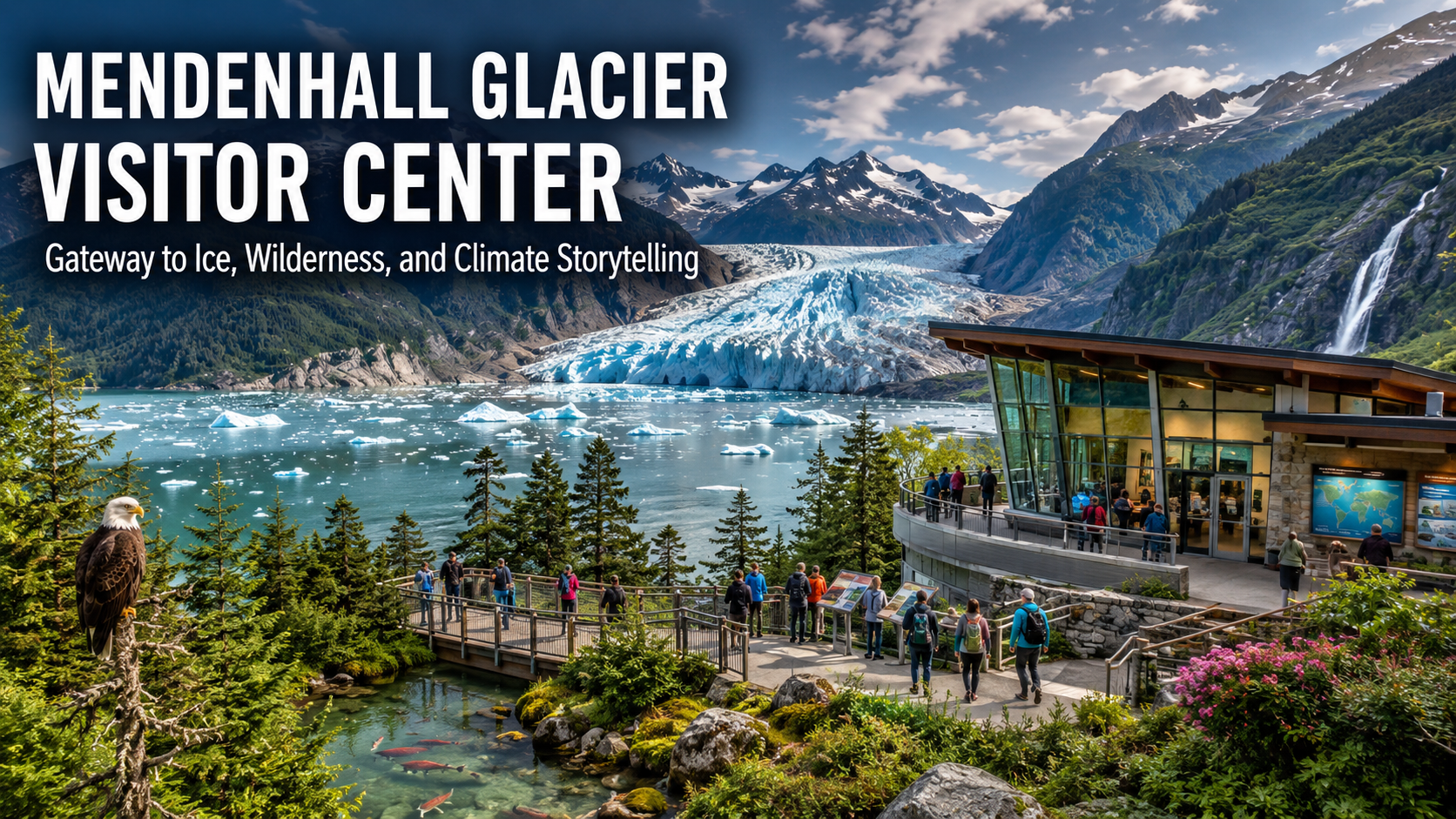
Located in the Mendenhall Valley just outside Juneau, the Mendenhall Glacier Visitor Center is one of Alaska’s most important interpretive gateways to glacial landscapes. Overlooking the dramatic face of the Mendenhall Glacier and its iceberg-filled lake, the center connects visitors to the natural systems of the Tongass National Forest while offering direct access to trails, wildlife viewing areas, and educational exhibits.

More than just a viewpoint, it is a place where science, nature, and tourism intersect.

A Front-Row View of a Changing Glacier

The main attraction of the visitor center is its panoramic view of the Mendenhall Glacier, one of the most accessible glaciers in Alaska. From the observation decks and large windows inside the facility, visitors can see icebergs floating on Mendenhall Lake and the glacier’s striking blue ice face in the distance.

This view is not static. Over time, the glacier has visibly retreated, reshaping the shoreline and expanding the lake. The visitor center helps interpret these changes, turning the landscape into a real-time example of glacial movement and climate-driven transformation.

For many visitors, this is their first direct encounter with a living glacier system.

The First National Forest Visitor Center

The facility holds a unique place in U.S. history. It was the first visitor center built within the United States National Forest System, originally opened in 1962.

At the time, it was designed to accommodate only a small number of annual visitors. Today, it receives hundreds of thousands of guests each year, reflecting both the rise of tourism in Juneau and the global interest in glacial environments.

A major renovation in the late 1990s expanded the facility with modern exhibits, theater presentations, and improved viewing areas while preserving its educational mission.

Inside the Visitor Center: Education in Motion

The interior of the center is designed as an immersive learning space. Large windows frame the glacier and surrounding peaks, allowing the landscape itself to become part of the exhibit.

Key features include:

  • Interactive displays explaining glacier formation and movement
  • A short documentary film on glacial change in Alaska
  • Ranger-led talks during peak visitor season
  • Exhibits on local wildlife and the regional ecosystem
  • A bookstore supporting conservation education programs

Instead of separating learning from observation, the center blends the two visitors learn while directly looking at the subject of study.

Trails That Bring the Landscape Closer

One of the most important aspects of the Mendenhall Glacier Visitor Center is its direct access to outdoor trails. These paths allow visitors to move from observation to immersion within minutes.

Photo Point Trail

A short paved route that leads to one of the most iconic glacier viewpoints. It provides a direct line of sight to the ice field and floating icebergs.

Nugget Falls Trail

This 1.9-mile round-trip trail leads to Nugget Falls, a powerful waterfall that flows directly into Mendenhall Lake near the glacier face.

Steep Creek Boardwalk

A wildlife-focused trail system where visitors can safely observe salmon streams and seasonal bear activity from elevated platforms.

Each trail offers a different perspective on the glacier ecosystem from ice to forest to freshwater systems.

Wildlife Encounters in a Glacial Ecosystem

The visitor center area is one of the best places in Juneau for wildlife viewing. Because it sits at the intersection of forest, river, and lake environments, it supports a wide range of species.

Common sightings include:

  • Black bears feeding on salmon during summer runs
  • Bald eagles perched along the creek and lake edges
  • Salmon moving upstream through Steep Creek
  • Songbirds and waterfowl in wetland areas

The Steep Creek boardwalk is especially popular for bear viewing during salmon season, offering safe, elevated observation points.

Wildlife Encounters in a Glacial Ecosystem

Access and Location

The Mendenhall Glacier Visitor Center is located approximately 12 miles from downtown Juneau, accessible via Glacier Spur Road. Visitors typically arrive by shuttle, taxi, tour bus, or public transportation.

Despite its proximity to urban areas, the center feels deeply connected to wilderness. Within minutes of leaving the city, the landscape shifts into forest, wetlands, and glacial terrain.

This accessibility makes it one of the most visited natural attractions in Alaska.

A Living Classroom on Climate Change

Beyond its scenic appeal, the visitor center plays a critical educational role. It helps visitors understand how glaciers form, move, and respond to changing climate conditions.

The retreat of Mendenhall Glacier is one of the most visible examples of environmental change in North America. Where ice once extended much closer to the visitor area, meltback has created a growing lake and exposed new land.

This transformation is used as a teaching tool, helping visitors connect global climate patterns to real-world landscapes.

Part of the Greater Tongass Ecosystem

The center is located within the broader ecological system of the Tongass rainforest, one of the most biologically rich temperate rainforests in the world.

This means visitors experience not just a glacier, but an entire connected environment:

  • Coastal rainforest vegetation
  • Freshwater streams and salmon cycles
  • Alpine and glacial terrain transitions
  • Marine influences from nearby channels

This ecosystem integration is what makes the site more than a viewpoint it is a full environmental corridor.

Why the Visitor Center Defines the Juneau Experience

The Mendenhall Glacier Visitor Center represents one of the most accessible ways to experience Alaska’s natural identity.

It combines education, scenery, wildlife, and climate awareness in a single location, making it essential for both first-time visitors and returning travelers.

For those exploring Juneau, it offers something rare: the ability to stand in a building and look directly into a glacier landscape that is actively changing in real time.

It is not just a stop on a tour it is a front-row seat to one of Alaska’s most powerful natural systems.

Next: Alaska State Capitol in Juneau, Alaska

Go to homepage

Related Topics Travelers Often Ask About

Are Segways safe for seniors?

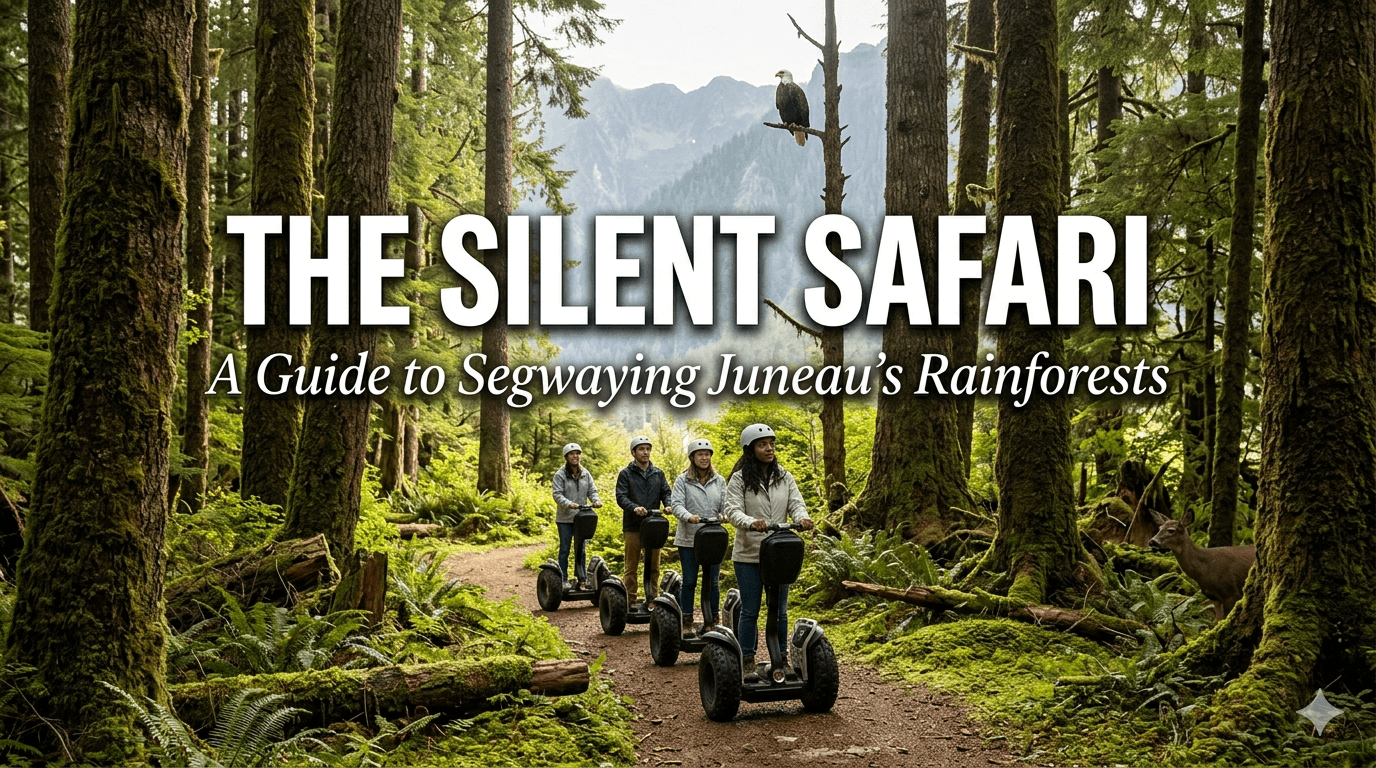
Many of our most enthusiastic riders are seniors! Provided you have a normal level of balance and the ability to stand for the duration of the tour (about 2-3 hours), it is a fantastic, low-impact way to see the “Quiet Side” of Juneau without physical strain.

Physical Requirement: To ride safely, you must be able to step up approximately 8 inches (the height of a standard stair step) unassisted.

What safety gear is provided on Segway tours?

We take a “safety-first” approach to our equipment. Every guest receives:

  • Helmets: High-quality, safety-certified helmets are mandatory.
  • Reflective Gear: For enhanced visibility in the misty rainforest.
  • “Liquid Sunshine” Ponchos: To keep you dry and focused on the trail, not the weather.

DIY Exploring vs. Guided Tours with iRide Alaska

While you could try to navigate the Tongass on your own, a guided tour offers a massive safety net.

The Guided Advantage

  • Emergency Preparedness: Every guide carries a comprehensive first-aid kit and a two-way radio for instant communication with our base.
  • Trail Knowledge: We know which paths are clear and which might be slippery after a morning rain.
  • Wildlife Management: Our guides are trained in bear awareness, ensuring you get the photo from a safe, respectful distance.

Safety and Comfort for All Riders

We have established clear Segway safety requirements to ensure everyone has a positive experience:

  • Age/Weight Limits: Guests must be at least 10 years old (we provide specialized 1-on-1 training for younger riders) and weigh between 100 and 260 pounds.
  • Health Restrictions: For safety reasons, we cannot accommodate pregnant guests or those with severe mobility/balance issues.
  • Communication: If you use a hearing aid or have a stable medical condition, you are welcome! Just let your guide know so they can provide the best support.

Tips for Making the Most of Your Adventure

  1. Footwear is Key: Wear flat, closed-toe shoes (sneakers or hiking boots). No flip-flops or heels!
  2. Listen to the “Stick-Shake”: Your Segway has a built-in speed limiter. If you go too fast, the handle will gently vibrate. That’s the machine’s way of saying, “Slow down and enjoy the view!”
  3. Eyes on the Trail: Keep your head up—it actually helps your balance more than staring at your feet!

Layer Up: Juneau weather changes fast. Wear moisture-wicking layers so you stay comfortable regardless of the “liquid sunshine.”

Conclusion:

So, are Segway tours safe? In the hands of the right team, they are one of the safest and most exhilarating ways to explore the Last Frontier. By combining cutting-edge technology with rigorous Segway tour safety measures and our No Missed Ship Guarantee, iRide Alaska ensures that you can focus on the majesty of the rainforest with total peace of mind.

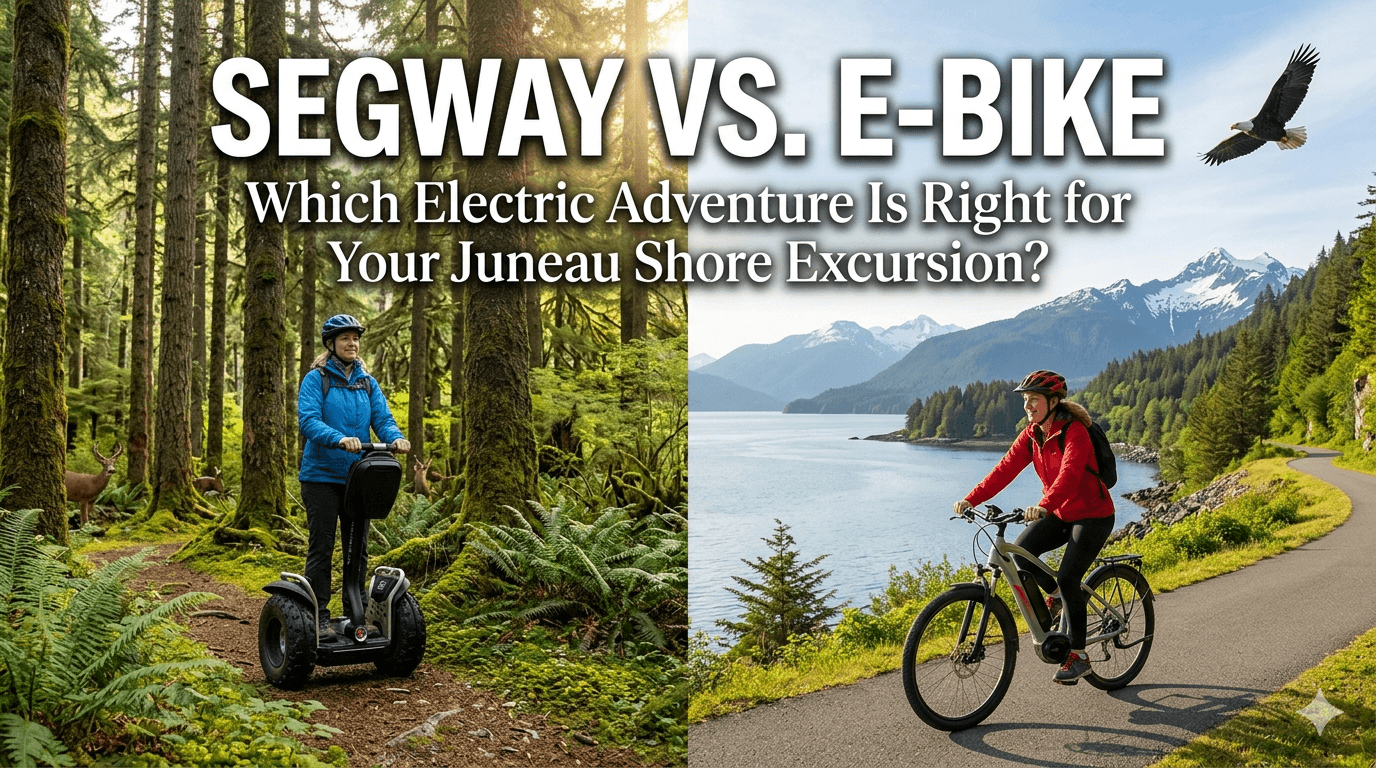
If you want a fun and memorable way to explore Juneau, book a Segway or e-bike adventure with iRide Alaska today.

Frequently Asked Questions:

Are Segway tours safe?

Yes, Segway tours are extremely safe when conducted by a professional operator like iRide Alaska. We provide high-tech, self-balancing equipment and 1-on-1 safety training for every guest to ensure they are comfortable before heading out.

Are Segways safe for seniors?

Absolutely! Many seniors enjoy our tours as they are low-impact and require much less physical exertion than hiking. As long as you can stand for the duration of the tour and step up about 8 inches onto the platform, you’re ready to glide.

Can I join a Segway tour if I have limited mobility?

Because Segways are standing vehicles that require balance, they are not suitable for those with significant mobility issues or those who use a wheelchair. However, if you can stand comfortably and walk a short distance, you may find the Segway quite accessible.

Can I join a Segway tour with a medical condition?

It depends on the condition. We recommend that guests with heart, back, or neck problems consult their doctor first. For your safety, iRide Alaska requires all riders to be in good general health and able to maintain their balance.

Can I participate in a Segway tour with a hearing aid?

Yes! Guests with hearing aids participate in our tours regularly. We just ask that you inform your guide so they can ensure you hear all safety instructions and tour narrations clearly via our radio headsets.

Can pregnant guests join Segway tours?

No. For the safety of both the mother and the baby, we do not permit pregnant guests on our Segway or e-bike tours.

Can visually impaired guests join Segway tours?

Safe operation of a Segway requires the ability to see and react to changes in terrain and obstacles. Therefore, a normal level of vision is required to participate in our guided tours.

Are emergency contacts required for Segway tours?

Yes, we collect emergency contact information as part of our standard safety protocols. This is a common practice for all professional Alaska adventure tours.

Are helmets provided for Segway tours in Alaska?

Yes, iRide Alaska provides safety-certified helmets for all guests. Wearing a helmet is a mandatory requirement for participation in any of our tours.

Are there safety briefings before Segway tours?

Yes, every single tour begins with a detailed safety briefing covering the mechanics of the machine, trail etiquette, and local wildlife safety.

Do Segway tour guides carry first-aid kits?

Yes, every iRide Alaska guide is equipped with a comprehensive first-aid kit. Our guides are also trained in basic first-aid procedures.

Do Segway tour guides carry radios?

Yes, guides carry two-way radios for communication with our base office and other guides. Many of our tours also use guest headsets so you can hear your guide’s safety tips even while gliding.

Do you need a helmet to ride a Segway?

Yes, a helmet is a non-negotiable safety requirement at iRide Alaska. We provide sanitized, high-quality helmets in various sizes to fit every rider.

Is safety training included before Segway tours?

Yes, 1-on-1 hands-on training is included in every tour. We won’t start the adventure until you demonstrate that you can safely start, stop, and turn your Segway.

Is there a risk of motion sickness on Segway tours?

It is very rare. Because your body is the "engine" that controls the movement, most riders find the experience very grounded and natural, unlike being in a moving car or boat.

What safety measures are included in Segway tours?

Our measures include professional-grade equipment maintenance, small-group ratios, expert safety training, and guides who are trained in both first-aid and bear awareness

Recent Posts