Along the edge of Juneau, the Juneau Waterfront & Totem Poles area forms one of the city’s most visually iconic and culturally significant spaces. Stretching beside the Gastineau Channel near downtown, this waterfront corridor blends active maritime activity, public walkways, and displays of Alaska Native totem poles that reflect the deep Indigenous heritage of the region.
It is a place where cruise ships, fishing boats, public art, and coastal scenery all come together in a compact and highly walkable setting.
The Waterfront: Juneau’s Maritime Front Door
The Juneau waterfront is the primary arrival point for thousands of cruise passengers each summer. Multiple docks and terminals line the shoreline, allowing large vessels to dock directly adjacent to downtown.
From the moment visitors step off the ship, they are immediately surrounded by:
- Mountain views rising steeply behind the city
- Active harbor traffic including ferries and fishing boats
- Shops, restaurants, and tour operators within walking distance
- Coastal air and open water views across the channel
This direct connection between ship and city is one of the defining features of Juneau’s tourism experience.
Unlike many ports that require shuttles or long transfers, Juneau’s waterfront places visitors directly into the heart of the capital.
A Walkable Corridor Between City and Sea
The waterfront area is designed for pedestrian access, with wide walkways and viewing areas that allow visitors to explore safely and comfortably.
Walking along the shoreline offers continuous views of:
- Douglas Island across the water
- Snow-capped peaks in the distance
- Cruise ships docked along multiple terminals
- Seaplanes landing and taking off nearby
The experience is dynamic, with constant movement on the water and changing light conditions reflecting off the channel.
This makes the waterfront not just a transit zone, but a destination in itself.
Totem Poles: Cultural Storytelling in Public Space
One of the most distinctive features of the waterfront area is its collection of totem poles, which represent the artistic and cultural traditions of Alaska Native peoples, particularly the Tlingit, Haida, and Tsimshian communities.
These carved wooden poles are not merely decorative they are storytelling structures that communicate:
- Clan histories
- Ancestral legends
- Cultural identity and lineage
- Spiritual and symbolic meanings
Placed along the waterfront, these totem poles create a visible link between modern Juneau and the region’s Indigenous heritage.
They stand as both educational artifacts and cultural expressions in a public setting.
Cultural Significance and Respectful Interpretation
The totem poles along the Juneau waterfront are part of a broader effort to preserve and share Alaska Native cultural traditions. Many are created or restored by Indigenous artists and cultural organizations.
Visitors are encouraged to view them as cultural narratives rather than simple art objects. Each carving contains layers of meaning that reflect generations of oral history and artistic practice.
Interpretive signage near the poles often provides context about their origins, symbolism, and the communities that created them.
This integration of public art and cultural education helps preserve Indigenous heritage in a highly visible urban space.
Connection to Downtown Juneau
The waterfront is directly connected to Downtown Juneau, making it one of the most accessible cultural and scenic areas in the city.
From the docks, visitors can walk into downtown within minutes, passing shops, historic buildings, and government structures along the way.
This close relationship between waterfront and downtown creates a seamless transition from maritime environment to urban center.
It also reinforces Juneau’s identity as a capital city shaped by both government and coastal geography.
Maritime Activity and Working Harbor Life
The waterfront is not only a tourist area it is also an active working harbor. Fishing boats, freight vessels, ferries, and tour operators use the docks year-round.
Key maritime functions include:
- Cruise ship docking during summer season
- Alaska Marine Highway ferry services
- Commercial fishing operations
- Tour boat departures for whale watching and glacier excursions
- Seaplane activity in nearby waters
This blend of tourism and industry gives the waterfront a constantly active atmosphere.
Unlike purely scenic boardwalks, Juneau’s waterfront remains a functional part of the city’s economy and transportation network.
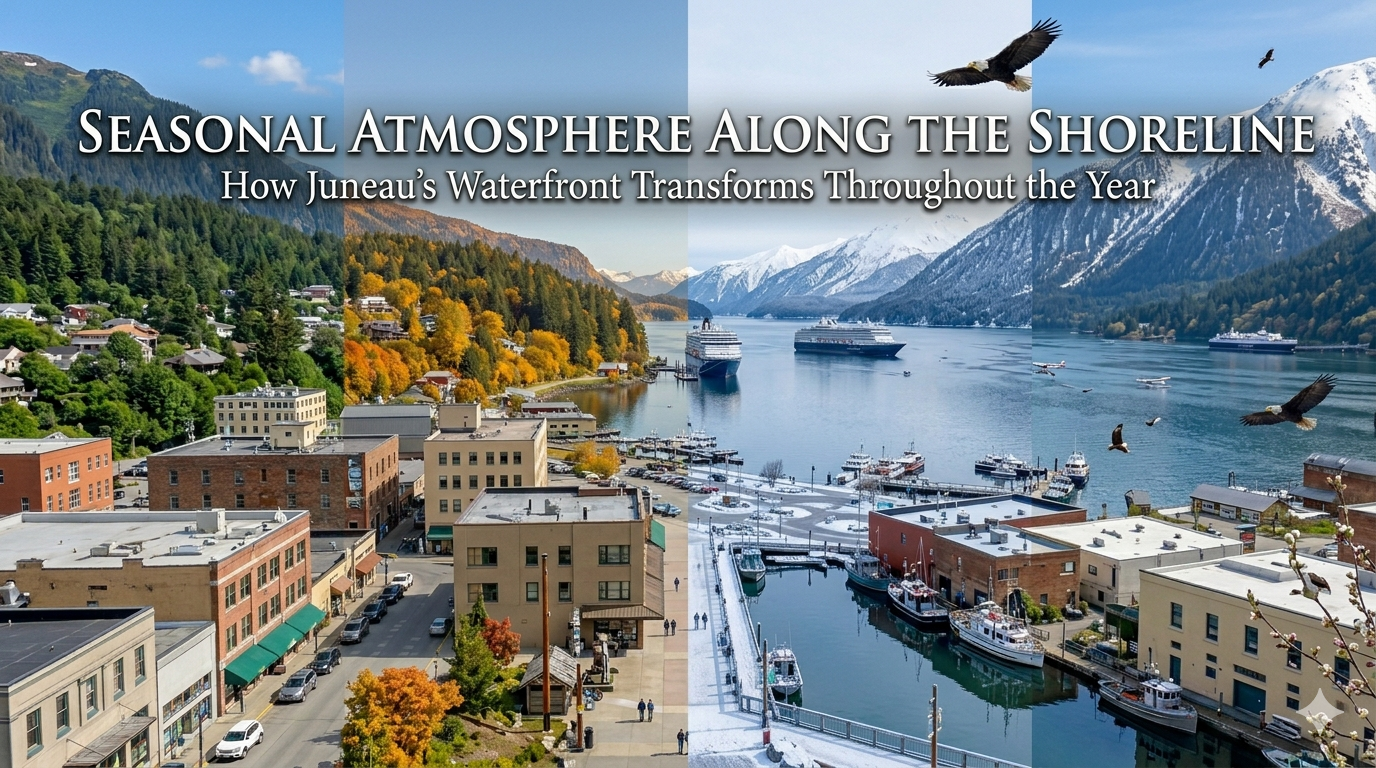
Seasonal Atmosphere Along the Shoreline
The waterfront changes dramatically throughout the year, reflecting Juneau’s maritime climate.
- Summer: Cruise ships dominate the harbor, and pedestrian traffic is at its peak
- Fall: Fewer ships create a quieter, more reflective atmosphere
- Winter: Snow-covered mountains frame a calm, low-traffic waterfront
- Spring: Returning wildlife and increasing daylight signal the start of tourism season
These seasonal shifts influence both activity levels and visual conditions along the shoreline.
Wildlife and Natural Surroundings
Despite its urban setting, the waterfront remains closely connected to natural ecosystems. The Gastineau Channel supports marine life and attracts various bird species.
Common sightings include:
- Bald eagles perched along dock structures or flying overhead
- Seals swimming near the shoreline
- Seabirds following fishing vessels
- Occasional marine wildlife in deeper waters
The nearby mountains and forests are part of the broader Tongass National Forest ecosystem, ensuring that wilderness is always visible from the waterfront.
Public Space, Art, and Community Identity
The waterfront and totem pole areas function as both public space and cultural showcase. Locals and visitors use the area for walking, photography, sightseeing, and cultural learning.
Public art installations, benches, and viewing platforms encourage people to pause and engage with the environment rather than simply pass through it.
This blend of utility, art, and scenery helps define Juneau’s identity as a city where nature and culture coexist closely.
Why the Waterfront & Totem Poles Define Juneau’s First Impression
The Juneau Waterfront & Totem Poles represent one of the most important entry points into Juneau, especially for cruise visitors.
They combine:
- Immediate access from cruise ships to city streets
- Active maritime operations
- Indigenous cultural storytelling through totem poles
- Scenic mountain and coastal views
- Direct connection to downtown Juneau
Together, these elements create a layered introduction to Alaska’s capital where history, culture, and natural beauty are experienced all at once.
For many visitors, this waterfront corridor is their first and most lasting impression of Juneau, setting the tone for everything else the city has to offer.
Next: Alaska State Museum in Juneau