This article is general information, not medical advice. If you have a knee or back condition, check with your doctor or physical therapist before booking.
Key Points
- Many riders with sore knees or backs do well on Segway and e-bike tours, because both cut out most of the walking.
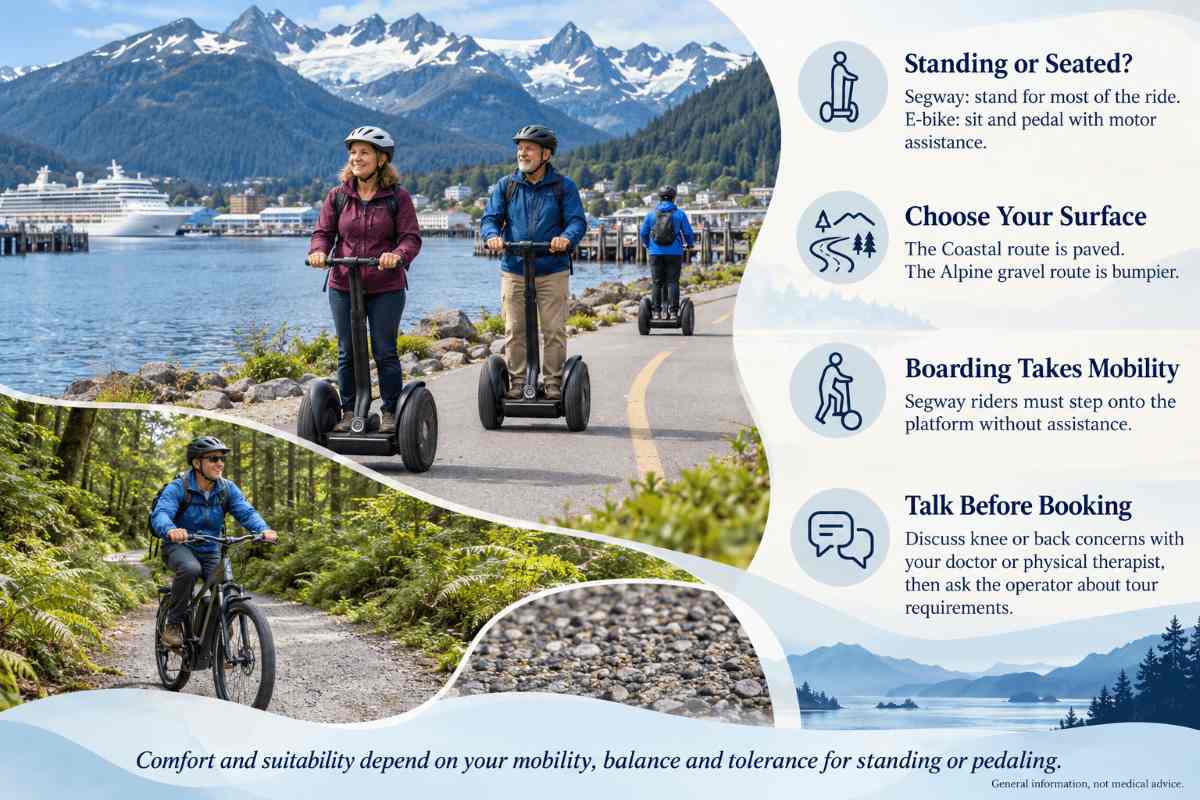
- A Segway tour means standing for most of the ride. An e-bike tour means sitting and pedaling with motor help.
- The Coastal Segway tour runs on a paved bike lane; the Alpine tour runs on gravel, which is bumpier.
- Segway riders need to step onto an 8-inch platform without help.
- Not sure? Call iRide. The team often makes exceptions and works out solutions.
A Segway tour with bad knees or a sore back is often possible, and it may even be the easiest way to see Juneau. If your knees ache on stairs or your back complains after an hour of walking, Segway and e-bike tours both take most of the walking out of sightseeing. The real question is which one suits your body: a Segway keeps you standing, while an e-bike keeps you seated and pedaling with a motor’s help.
We hear some version of “Can I do this with my knees?” all the time at iRide Alaska. The honest answer is “it depends,” so this guide lays out exactly what it depends on, tour by tour.
A Segway Tour With Bad Knees: What It Asks of Your Body
A Segway tour asks three things of you: stand for most of the ride, step onto an 8-inch platform without help, and have enough leg strength to stay upright for the length of the tour. The vehicle handles the balancing. You steer by gently leaning, and it’s easier to learn than most people expect. For anyone planning a Segway tour with bad knees, the standing is the part to think about.
There are limits. Segway‘s own safety guidance says you shouldn’t ride if you have problems with balance or motor skills, or a health condition that makes strenuous activity risky.
Standing can even be the point. Under the Americans with Disabilities Act, the Segway counts as a mobility device. U.S. Department of Justice guidance notes that someone who can stand may choose a Segway over a manual wheelchair “because of the health benefits gained by standing”. In other words, some people with mobility limits choose a Segway on purpose.
What Does an E-Bike Tour Ask of Your Body?
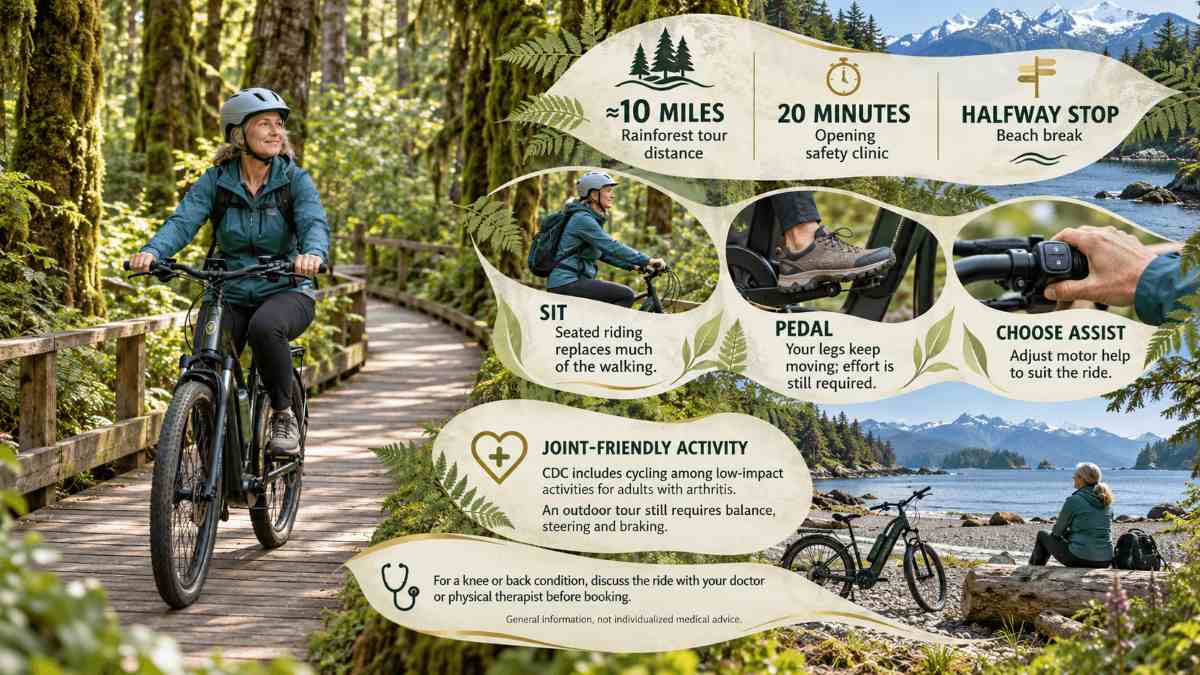
On an e-bike tour, you sit, pedal, and choose how much motor help you want. iRide’s Rainforest e-bike tour covers about 10 miles with a halfway beach stop, and it starts with a 20-minute safety clinic.
Health authorities are generally positive about cycling for sore joints. The CDC lists biking among the low-impact activities that are safe for most adults with arthritis. A UK physiotherapy provider also notes that pedal-assist e-bikes can work well for more severe knee arthritis.
Our e-bike safety gear guide covers what riders wear.
Segway Tour Accessibility: Which iRide Tour Is Easiest on Knees and Backs?
Each tour asks something different of your body, so put them side by side:
|
Coastal Segway |
Alpine Segway |
Rainforest e-bike |
|
|
Position |
Standing |
Standing |
Seated, pedaling |
|
Surface |
Paved bike lane |
Groomed gravel trail |
Trails, boardwalks, bike paths |
|
Walking |
7-minute trail to a beach |
10-minute walk on the Treadwell Ditch |
Halfway beach stop |
|
Getting on |
8-inch step |
8-inch step |
Leg over the frame |
|
Best for |
Knees that dislike pedaling |
Riders comfortable on uneven ground |
Backs or knees that dislike standing |

Of the two Segway options, the Coastal route is the gentler one: pavement is smoother than gravel, and iRide pitches it as ideal for first-time riders. The Alpine route is described as more technical; our Eaglecrest summer hiking guide walks through it stop by stop.
Riding With Bad Knees
Here’s how a Segway tour with bad knees compares with an e-bike ride:
- Segway: You aren’t climbing, squatting, or pedaling, but you are on your feet for most of the tour.
- E-bike: Pedaling bends your knees again and again, but the motor takes much of the load, and you can turn the help up when you need it.
- Knee replacement: Every recovery is different, so get the go-ahead from your surgeon or physical therapist before booking.
Riding With a Bad Back
- Segway: Upright posture and no sitting, which some backs prefer. Gravel adds jolts, so choose the paved Coastal route.
- E-bike: Seated, with your posture set by the bike’s handlebars and seat. The motor reduces strain on hills.
- Flare-up or recent injury: Don’t push through it. iRide refunds website bookings canceled at least 24 hours ahead, so you can rebook when you’re feeling better.
Expert Tips for a Segway Tour With Bad Knees
These tips help on any ride, but they matter most on a Segway tour with bad knees or a sore back:
- Wear supportive, closed-toe shoes. Flat sneakers or hiking boots are required for Segway riders anyway.
- Bring your usual brace or support. The UK physiotherapy provider above suggests knee supports for cyclists with arthritis.
- On an e-bike, use the motor. A higher assist level means less effort from your knees on climbs.
- Use the stops. Every tour has photo stops and a snack break, so stretch while you’re there.
- Speak up. Tell your guide if something starts to hurt.
A Quick Self-Check Before You Book
Run through these five questions:
- Can you step onto an 8-inch platform without help?
- Can you stand comfortably for more than 30 minutes at a time?
- Can you manage a short trail walk of 7-10 minutes?
- Does sitting on a bike seat bother your back?
- Has your doctor or therapist given you any limits?
If you answered no to several, that’s useful to know. A tram ride or a Mendenhall Glacier viewing day may give you a better time than a ride.
How iRide Can Help
iRide’s team often makes exceptions and works out solutions over the phone. On tour day, mention your knee or back during the safety briefing so your guide knows. Our guide to Segway tour safety explains how that briefing works.
Conclusion: Taking a Segway Tour With Bad Knees
A Segway tour with bad knees or a sore back comes down to one question: standing or sitting. Match the tour to what your knees and back handle best, check in with your provider, and call iRide Alaska if you’d like help choosing.
Related tours: Juneau Segway excursions | Juneau e-bike excursions
Frequently Asked Questions
Can you take a Segway tour with bad knees?
Often, yes. A Segway tour with bad knees means no climbing or pedaling, but you stand for most of the tour and need to step onto an 8-inch platform.
Is a Segway or an e-bike better for knee arthritis?
It depends on what bothers your knees. Some people prefer standing; others prefer seated pedaling with motor help, which the CDC counts as low-impact.
Can you ride a Segway with lower back pain?
Some people can. Choose the paved Coastal route over gravel, and check with your provider first.
Is an e-bike good for a bad back?
It can be, since you sit and the motor helps on hills. Ask your provider whether the riding position suits your back.
Can I do a Segway tour after a knee replacement?
Ask your surgeon or physical therapist. Recovery timelines vary from person to person.
How long do you stand on a Segway tour?
Tours last about 3 hours, including stops and short walks.
Is there walking on iRide tours?
A little. The Coastal tour includes a 7-minute trail walk, and the Alpine tour a 10-minute walk.
Which iRide tour is the easiest physically?
The Coastal Segway tour, on a paved bike lane, is built for first-time riders. The e-bike tour suits people who’d rather sit.
What if my back flares up before my tour?
Cancel at least 24 hours ahead for a full refund on website bookings, then rebook when you’re feeling better.
Who should not ride a Segway?
Segway says people with balance or motor-skill problems, or a condition that makes strenuous activity risky, should not ride.
This article is general information, not medical advice. If you have a knee or back condition, check with your doctor or physical therapist before booking.